

The Great Divide: The Difference Between Running Ads and Running Profitable Campaigns
Updated: May 18
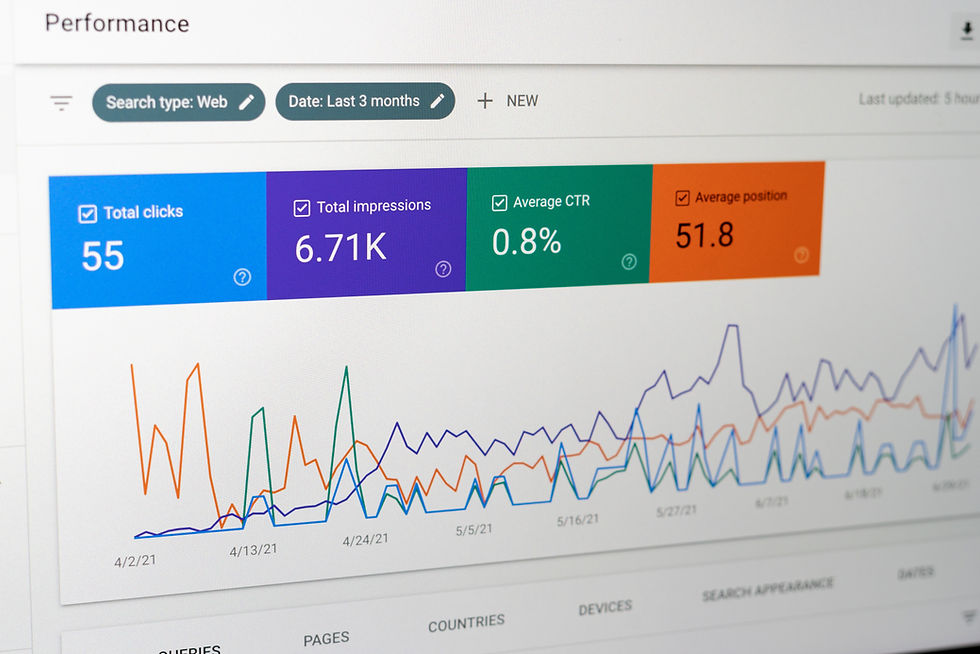
There is a deceptive simplicity to modern advertising. If you have a credit card and a browser window, you can be "live" on Google or Meta in about ten minutes. The platforms are designed this way; they make it incredibly easy to hit a "Promote" button or launch a "Smart Campaign."
Because the barrier to entry is so low, many business owners fall into a dangerous trap: they confuse activity with performance. They see that their ads are getting "impressions" and "clicks," and they assume the machine is working. But at the end of the month, when they look at their bank account, the needle hasn't moved. The revenue doesn't reflect the effort.
At TierOne, we see this phenomenon every single day. We talk to founders who are convinced that "Google Ads doesn't work for our industry" or "Facebook is a money pit." In reality, the platform isn't the problem—the approach is.
Running ads is a technical task. Running profitable advertising campaigns is an engineering feat. To achieve a high paid ads ROI, you have to bridge the gap between just "being seen" and "being profitable."
Let’s take a look at what that gap really looks like and how you may turn your ad spending from a cost into a sure thing.
Understanding the Gap: Effort vs. Strategy
The difference between a failing ad account and a thriving one often comes down to the "system" behind the creative.
Running Ads looks like this:
Boosting posts because "engagement" feels good.
Sending every click to your generic homepage.
Setting a budget and "letting it ride" without checking the data.
Having no idea which specific keyword actually led to a phone call.
Running Profitable Campaigns looks like this:
Laser-focused targeting based on actual buyer personas.
Sending traffic to highly specific, high-converting landing pages.
Using full-funnel tracking to see exactly where every dollar goes.
Iterative testing where "losing" ads are cut and "winning" ads are scaled.
The difference isn't about how hard you work; it’s about the Google Ads strategy and the execution of a connected ecosystem.
1. Traffic Without Intent: The "Busy-ness" Trap
The biggest mistake you can make in digital advertising is believing that all traffic is created equal. It isn't. If you sell high-end enterprise software and your ads are attracting hobbyists looking for a "free version," you are effectively paying to talk to people who will never buy from you.
Many campaigns fail because they focus on volume over value. They cast a wide net, hoping to catch a few big fish, but they end up paying for a lot of seaweed instead.
How to Fix It: Focus on High-Intent Targeting To see a real paid ads ROI, you must align your targeting with the user's "State of Mind."
Google Ads Strategy: Use "Intent-Based" keywords. Instead of bidding on a broad term like "marketing," bid on "B2B lead generation agency for SaaS." The second one is more expensive per click, but the person searching for it is much closer to a purchase.
Social Refinement: On social platforms, don't just target by interest; target by behavior and life stages.
The Journey Alignment: Make sure your ad copy matches what the user is looking for at that moment. If they are in the research phase, give them information. If they are in the buying phase, give them a reason to choose you.
2. The Homepage Error: Where Profit Goes to Die
Imagine walking into a physical store because you saw a sign for "50% off Red Toasters." You walk inside, and the clerk just gestures vaguely toward the back of the massive warehouse and says, "Everything we own is back there somewhere. Good luck."
You’d probably leave.
This is exactly what happens when you send paid traffic to your website's homepage. A homepage is designed to be an overview; it’s a "choose your own adventure" for general visitors. But for an ad clicker, it’s a friction point. They clicked for a specific reason—a specific offer, product, or solution. If they have to search your site to find it, they’ll just hit the "back" button instead.
How to Fix It: The Power of the Dedicated Landing Page A profitable advertising campaign lives or dies on the landing page.
Message Match: The headline on your landing page should be almost identical to the text in your ad. This creates "scent," confirming to the user they are in the right place.
Single Goal: Remove the top navigation menu. Remove the footer links. Give the user one choice: take the offer or leave.
Trust Signals: Include testimonials and proof points that are relevant to the specific thing you are advertising.
3. The "Blindfold" Problem: No Tracking, No Growth
If you can’t tell me exactly how much it costs you to acquire a customer, you aren't running a business you’re gambling.
We see many accounts where the business is celebrating a "0.50 cent cost-per-click." But if those clicks never turn into leads, those 50 cents are wasted. Without proper conversion tracking, you are essentially flying a plane with a blacked-out cockpit. You might feel like you're moving fast, but you have no idea if you're about to hit a mountain.
How to Fix It: Engineer Your Analytics What gets measured gets managed. You need a data-driven Google Ads strategy that accounts for every step of the funnel.
Conversion Actions: Track more than just sales. Track form fills, phone calls, and even "micro-conversions" like downloads.
The ROI Math: Calculate your break-even point. If you know a customer is worth $1,000 to you, you can comfortably spend $200 to get them. Without that data, you’ll constantly be afraid to spend money.
Attribution: Understand that a customer might click a Facebook ad today, an email tomorrow, and a Google ad next week. Use tools to see the whole story, not just the last click.
4. The Temptation to Scale Too Fast
We call this "The Lottery Mentality." A business owner sees a few good days of performance and immediately triples the budget.
The problem? Scaling a campaign that isn't fully optimized doesn't just multiply your results—it multiplies your inefficiencies. If your funnel is "leaky" (meaning you lose people at the landing page or checkout stage), pouring more money into the top of the funnel just means you're wasting more money, faster.
How to Fix It: Strategic, Incremental Growth Scaling is a reward for a job well-done, not a shortcut to success.
The 20% Rule: Don't double your budget overnight. Increase it by 15-20% every few days to allow the platform's algorithm to adjust.
Creative Testing: Before you spend more, ensure you've found the "winning" creative. Run three different images and three different headlines. Once the data tells you which one wins, then put the heavy spend behind it.
Check the Infrastructure: Ensure your sales team or your website can handle the increased volume before you turn up the heat.
5. Ignoring the Full Funnel: The "One-Night Stand" Strategy
Most ads are designed like a bad first date: "Hi, I'm [Company Name]. Will you marry me (buy my $2,000 product)?"
The reality of human psychology is that people rarely buy the first time they see a brand. They need to get to know you. They need to trust you. If your ad strategy only focuses on the "First Click," you are ignoring 95% of your potential revenue.
How to Fix It: Build a Journey, Not a Billboard Profitable campaigns are multi-layered. They account for the "Full Funnel":
Top of Funnel (Awareness): Ads that provide value or solve a small problem for free.
Middle of Funnel (Consideration): Retargeting ads for people who visited your site but didn't buy. Show them a case study or a "how-to" video.
Bottom of Funnel (Conversion): This is where you make the "hard" offer. Since they already know you, the "Yes" comes much easier.
Retention: Use ads to stay top-of-mind with existing customers. It’s always cheaper to keep a customer than to find a new one.
6. The "Stop-Start" Cycle: Short-Term Thinking
Marketing is not a light switch; it’s an engine. When you turn a campaign on for three days, get nervous, and turn it off, you are resetting the "learning phase" of the platform's AI.
Modern advertising platforms like Google and Meta use machine learning to find your buyers. This takes time. It takes data. Every time you pause a campaign because of a single "slow" Tuesday, you are sabotaging your own progress.
How to Fix It: Commit to the Process Sustainable profitable advertising campaigns require patience and consistency.
The Learning Phase: Budget for at least 14-30 days of "data collection" where the primary goal isn't profit it's learning.
Weekly Optimization: Don't check your ads every hour. Check them once a week. Look for trends, not outliers.
The Long View: Treat your ad spend like a 401k. The goal is long-term, compounding growth, not a "quick hit" on the slots.
Final Thoughts: Profitability Is Engineered
Running ads is a commodity. Anyone can do it. But engineering a campaign that consistently turns $1 into $4? That is a competitive advantage that can change the trajectory of your entire business.
The businesses that win in 2026 aren't the ones with the biggest budgets; they’re the ones with the best systems. They are the ones who obsess over their paid ads ROI, who never send traffic to a homepage, and who let data not ego guide their decisions.
At TierOne, we don't just "run ads." We build revenue engines. We take the guesswork out of the equation so you can stop wondering if your marketing is working and start planning for what you'll do with the growth it generates.
Ready to Turn Your Ads Into a Revenue Engine?
If you’re tired of seeing "clicks" that don't turn into customers, it’s time to stop running ads and start running a strategy.
Let TierOne help you build profitable advertising campaigns that don't just spend money—they make it.


Comments